
Choosing ppf and ceramic coating is not a matter of picking two versions of the same product. They solve different paint problems: paint protection film is a physical sacrificial layer for impact-prone panels, while ceramic coating is a thin surface treatment that changes how water, grime, and contaminants interact with the paint. For a Tacoma owner protecting a new SUV, a luxury vehicle, a daily commuter, or a freshly corrected used car, the right combination depends on driving conditions, panel exposure, maintenance habits, and how long the vehicle will be kept.
What Ppf And Ceramic Coating Actually Do
Paint protection film, usually called PPF, is a clear film installed over selected painted surfaces or an entire vehicle. It is designed to take the abuse that would otherwise reach the clear coat: road debris, gravel impact, light abrasion, and repeated contact at vulnerable edges. The film is not a permanent force field, and it can still be cut, punctured, stained, or damaged. Its value is that a damaged film section may be replaced without repainting the panel underneath.
Ceramic coating is a liquid-applied coating that cures into a bonded, low-surface-energy layer over properly prepared paint. It is primarily a chemical and maintenance barrier, not a thick impact shield. A quality coating can make water and contamination release more readily, add gloss, and reduce the effort required to wash the vehicle. It does not make paint immune to rock chips, parking-lot impacts, deep scratches, or poor washing technique.
One protects against impact; the other manages the surface
The simplest useful distinction is this:
- PPF absorbs physical punishment in areas that see direct debris or contact.
- Ceramic coating changes surface behavior, especially water sheeting, beading, dirt release, and resistance to some environmental contamination.
- PPF can be installed on top of painted panels and then coated with a product approved for film, subject to the film and coating manufacturers’ instructions.
- A coating cannot restore missing paint, hide deep defects, or substitute for film on a front bumper that regularly sees gravel.
- Neither product eliminates the need for safe washing, prompt removal of bird droppings, or professional decontamination when buildup becomes bonded.
The two systems are therefore complementary. A front bumper may need the impact protection of film, while the roof, doors, and rear quarter panels may benefit more from a coating that makes routine cleaning easier. The film itself may also receive a compatible top coating, but that is a separate compatibility decision rather than an automatic step.
Where the difference becomes practical
Imagine two Tacoma-area vehicles. A new performance car used for highway commuting may collect repeated stone impacts on its bumper, hood edge, and mirror caps. Film addresses that exposure directly. A family crossover used mostly for errands may experience fewer impacts but more rain, road film, pollen, and dirty washes. A ceramic coating can make its maintenance routine more manageable, while selective PPF can still protect the front bumper and door cups.
For owners comparing services, ask what problem each recommendation is solving. “More gloss” is not a sufficient reason for PPF. “Rock-chip protection” is not a sufficient reason for ceramic coating. The installation plan should connect each product to a specific panel, contamination source, or maintenance goal.
Why Tacoma Driving Conditions Influence the Choice
Vehicle protection is partly a geography and usage decision. A vehicle driven between Tacoma, Gig Harbor, Olympia, and Seattle sees highway spray, construction debris, wet-weather grime, and frequent transitions between clean and contaminated surfaces. A vehicle parked outdoors near trees may face sap, bird droppings, pollen, and water spotting. A garage-kept weekend vehicle has a different exposure pattern from a daily commuter.
These conditions do not make a coating or film fail automatically. They change which limitation matters most. A driver who covers thousands of highway miles may value sacrificial film on the leading surfaces. A driver who washes at home may value a coating’s easier rinsing and more predictable drying. A driver who wants the vehicle ready for resale may need paint correction before deciding whether either protection product is worthwhile.
Think in exposure zones, not just vehicle-wide packages
Paint does not experience equal risk on every panel. A practical inspection separates the vehicle into exposure zones:
- Impact zone: front bumper, leading hood, front fenders, mirror caps, and sometimes rocker panels.
- Contact zone: door edges, door cups, trunk or liftgate ledges, and areas touched during loading.
- Contamination zone: roof, horizontal hood surfaces, rear hatch, and lower panels exposed to road film.
- Visibility zone: black trim, glossy pillars, and highly reflective panels where wash marks are obvious.
- Correction-sensitive zone: older paint with oxidation, etching, scratches, or inconsistent gloss.
PPF is usually most rational in the impact and contact zones. Ceramic coating is often more useful across the contamination and visibility zones, provided the underlying finish is properly prepared. This zoned approach can prevent an expensive mismatch, such as applying film over heavily damaged paint without addressing the defects first or coating a vehicle while leaving a vulnerable bumper unprotected.
Appearance and resale goals are related but not identical
A coating can help a well-maintained vehicle stay cleaner-looking between washes, but it does not guarantee a higher resale price. A future buyer will also see paint thickness, scratches, dents, service history, interior condition, tires, and evidence of proper care. PPF may preserve original paint in high-risk areas, but an aged or poorly maintained film can become part of the vehicle’s visual condition.
For a used vehicle being prepared for sale in 2026, a sensible priority is usually:
- Wash and decontaminate the vehicle.
- Inspect paint for defects that will remain visible through a coating or beneath film.
- Correct only as much paint as the condition and remaining clear coat justify.
- Choose protection that presents a clean, credible maintenance story rather than adding products indiscriminately.
That sequence protects the owner from paying for a glossy finish that merely magnifies sanding marks, oxidation, or embedded contamination.
How the Installation Works and Why Preparation Controls the Result
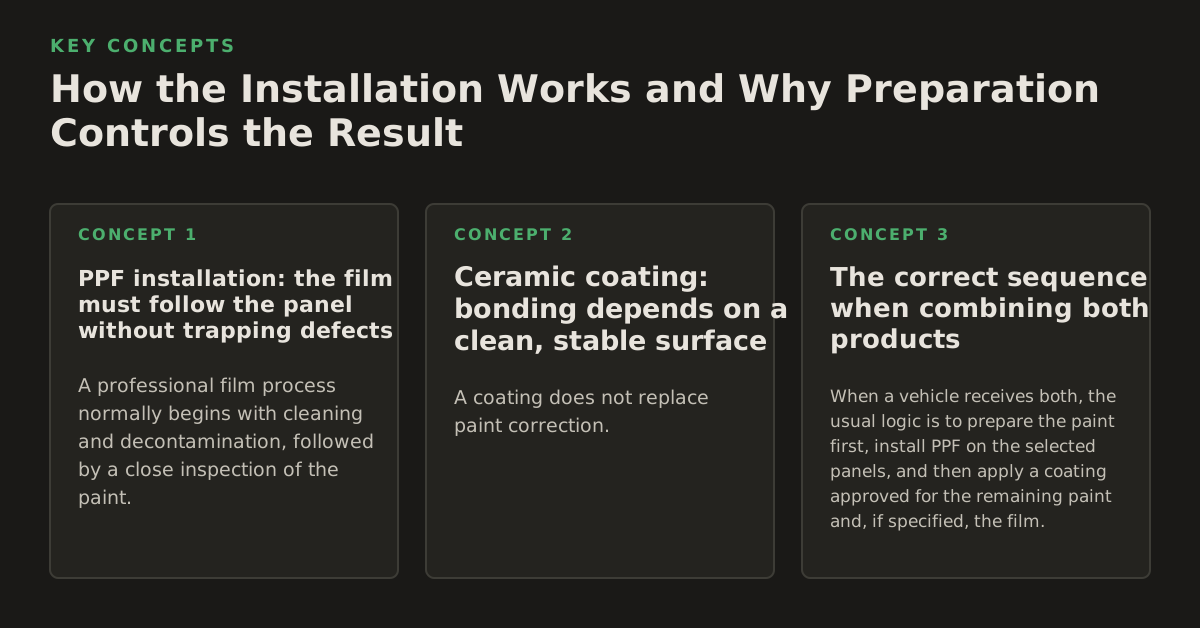
Both products are preparation-sensitive, but the preparation risks differ. Film installation depends on accurate pattern placement, clean edges, controlled stretching, and the installer’s ability to manage complex contours. Ceramic coating depends on paint correction, panel cleaning, controlled application, and correct curing conditions. Neither should be treated as a quick add-on after a routine wash.
PPF installation: the film must follow the panel without trapping defects
A professional film process normally begins with cleaning and decontamination, followed by a close inspection of the paint. Existing chips, touch-up marks, sanding scratches, and edge damage matter because a transparent film does not hide them. The installer then uses a pattern or carefully measured installation method, positions the film with an installation solution, and works out moisture and air while controlling tension.
The important mechanisms include:
- Pattern accuracy: the film must cover the intended risk area without creating obvious gaps or excessive exposed edges.
- Stretch control: too much tension can distort the pattern, weaken edge stability, or create visible stress.
- Edge management: wrapped or well-positioned edges are less visually distracting and less likely to collect contamination.
- Surface cleanliness: dust, fibers, and residue trapped beneath clear film remain visible after installation.
- Film compatibility: the film’s finish and care requirements should match the owner’s expectations for gloss, satin appearance, and washing.
Manufacturer instructions should control product-specific claims. For example, 3M describes its paint protection film as a polyurethane film intended to help protect painted automotive surfaces from road debris and environmental exposure; the exact product, finish, warranty, and care instructions vary by film series. See the official 3M paint protection film information before treating any generic PPF claim as universal.
Ceramic coating: bonding depends on a clean, stable surface
A coating does not replace paint correction. The installer first removes traffic film, iron contamination, tar, and other bonded material as appropriate for the vehicle. Machine polishing may then reduce swirls, haze, oxidation, or random defects. After polishing, the paint must be thoroughly wiped and inspected so polishing oils and residue do not interfere with coating application.
The coating is applied in small sections, allowed to flash according to the product’s instructions, and leveled before it becomes difficult to remove. The working environment matters because temperature, humidity, dust, lighting, and panel temperature influence how quickly the product flashes and how easily high spots can be identified. A high spot is an area where excess coating has not been leveled and may cure as a visible darker or streaked patch.
Professional coating systems publish their own preparation and maintenance requirements. Gtechniq, for instance, provides product-specific information for its coating range and emphasizes following the instructions for application and aftercare on its official ceramic coatings page. That is why “a five-year coating” or similar label should never be interpreted without identifying the exact product, required maintenance, environmental conditions, and warranty terms.
The correct sequence when combining both products
When a vehicle receives both, the usual logic is to prepare the paint first, install PPF on the selected panels, and then apply a coating approved for the remaining paint and, if specified, the film. The exact order can vary by product system and installer method. The central rule is follow the film and coating compatibility instructions, not a generic internet sequence.
A practical workflow may look like this:
- Inspect the vehicle under controlled lighting and document existing chips, scratches, repainted panels, and trim condition.
- Wash, chemically decontaminate, and mechanically decontaminate only as needed.
- Perform paint correction appropriate to the finish, age, and remaining clear coat.
- Clean and prepare the selected PPF panels.
- Install and inspect the film before proceeding.
- Apply the compatible coating to exposed paint and any approved film surface.
- Allow the system to cure under the stated conditions and provide aftercare instructions.
This sequence explains why an honest estimate may change after inspection. A vehicle with clean, nearly new paint may need minimal correction. A black used SUV with heavy wash marring may require substantially more preparation before protection can look uniform.
Where Ppf And Ceramic Coating Break Down
The most expensive mistakes usually come from expecting one product to solve a problem it was never designed to solve. A coating can be hydrophobic and still be scratched. PPF can stop a stone chip and still show staining. A polished panel can look excellent under shop lighting and reveal defects in direct sun. Protection improves the starting condition and maintenance burden; it does not repeal wear.
Common PPF limitations
- Film can be damaged: a large impact, sharp object, vandalism, or aggressive abrasion may cut through it.
- Edges remain maintenance points: poorly cleaned edges can accumulate wax, dirt, or mineral residue.
- Film can show contamination: road tar, hard-water deposits, and neglected organic material may stain or require specialized removal.
- Not every defect disappears: chips and paint irregularities beneath clear film remain visible.
- Coverage is never automatic: a “front package” can mean different panel boundaries, so the written coverage map matters.
Film also has an appearance choice. Gloss film may blend more naturally with a glossy factory finish, while satin or matte film changes the way a panel reflects light. Mixing finishes across adjacent panels can produce a deliberate custom look or an unintended mismatch. Owners of luxury vehicles should inspect a sample or finished reference panel before approving a full change in appearance.
Common ceramic coating limitations
- It is not a substitute for PPF where repeated rock impact is the primary concern.
- Hydrophobic behavior can decline when the surface is covered by traffic film, mineral deposits, or incompatible residue.
- Coating does not make automatic brushes, dirty towels, or dry wiping safe for paint.
- It cannot permanently prevent water spots when contaminated water is allowed to dry in the sun.
- It does not repair clear-coat failure, deep scratches, dents, or peeling paint.
Water behavior is also easy to misunderstand. Beading is a visual symptom, not a complete measurement of protection. A coated panel can sheet water rather than form tight beads, or temporarily lose beading because its surface is dirty. Maintenance should be judged by cleanliness, condition, and inspection—not by whether every droplet forms a perfect circle.
Care mistakes that shorten the useful life of either system
For Tacoma drivers, winter grime, wet roads, and mineral-heavy water can create a more meaningful maintenance challenge than the initial installation. A reasonable care routine should include:
- Rinse loose grit before making contact with the paint.
- Use clean, high-quality wash media and separate wheel tools from paint tools.
- Wash one section at a time rather than allowing soap or contaminated water to dry on the vehicle.
- Dry with clean equipment and avoid dragging visible grit across horizontal panels.
- Remove bird droppings, bug residue, tree sap, and road tar promptly using a method safe for the specific film or coating.
- Schedule inspection when an edge lifts, a film section clouds, or contamination no longer releases with normal washing.
For an illustrative starting policy—not a universal benchmark—an owner who drives 1,000 miles per month in mixed Tacoma-area conditions might perform a gentle wash every one to two weeks, inspect the front film at each wash, and arrange professional review when a defect is noticed rather than waiting for an annual appointment. Actual frequency should follow parking, weather, mileage, and contamination.
How Professionals Apply the Combination to Real Vehicles
The strongest recommendation is usually a coverage plan, not a product name. A practitioner should ask how the vehicle is used, where it is parked, whether it has been repainted, how the owner washes it, and which defects are acceptable. The answer may be full-front PPF with ceramic coating on the rest of the paint, partial PPF on contact points, coating alone, or correction and maintenance without either product.
Worked examples for common Tacoma-area decisions
- New luxury sedan, highway commute: prioritize PPF on the front bumper, leading hood, front fenders, and mirror caps; consider ceramic coating on exposed paint and compatible film surfaces.
- New pickup used for mixed road and job-site driving: inspect rocker panels, door edges, and loading areas in addition to the front end; use film selectively where tools, gravel, or repeated contact create risk.
- Three-year-old black crossover: correct wash marring and inspect clear-coat condition before choosing a coating; coating over uncorrected swirls preserves the defects visually.
- Weekend sports car stored indoors: a smaller PPF impact package may be sensible if highway exposure is occasional, while coating can support easier cleaning and a consistent finish.
- Vehicle being prepared for resale: prioritize honest correction, decontamination, trim restoration, and documented maintenance; add protection only when its appearance and future care justify the work.
These are decision examples, not universal packages. A vehicle inspection can change the recommendation because factory paint, previous repairs, panel contours, and existing protection all affect feasibility.
Questions to ask before approving an estimate
- Which exact panels receive PPF, and which edges are wrapped, tucked, or left exposed?
- Is paint correction included, and what defects are expected to remain?
- Is the proposed coating approved for the selected film, or will film and paint receive different products?
- What finish will the film produce next to the factory paint?
- What washing, curing, and contamination-removal instructions apply after delivery?
- How are future repairs handled if one film panel is damaged?
- Which claims come from the manufacturer’s written documentation, and which are simply the installer’s recommendation?
Owners researching local options can review paint protection film in Tacoma when impact protection is the first concern, or evaluate ceramic coating in Tacoma when surface maintenance and finish preservation are the primary goals.
A practical decision rule
Choose PPF first when the costliest likely damage is a chip, gouge, or repeated impact on a defined panel. Choose ceramic coating first when the dominant problem is contamination, difficult washing, or maintaining gloss on sound paint. Combine them when the vehicle has both exposure patterns and the owner is prepared to maintain both systems correctly.
For a new or valuable vehicle in 2026, the most defensible starting plan is often paint inspection before product selection, targeted PPF on impact zones, and ceramic coating on the remaining corrected paint. For a used vehicle, spend the first part of the budget on cleaning and correction assessment; protection cannot compensate for defects that should have been addressed before installation.
Gloss & Glory Auto Protection provides paint correction, ceramic and Icon Rocklear coatings, PPF, detailing, and window tinting for Tacoma-area vehicles. For a vehicle-specific coverage plan, start with Gloss & Glory Auto Protection and have the paint condition and driving exposure evaluated before choosing the combination.